My Story and the Problem.
Leveraging F&B operations for high margins or how to make money through compounding margins
Restaurants fail for a reason - and the reason is likely hidden in the P&L.
After spending the 90s in software startups, I built a SF Bay Area farmers’ market business that grew to 15 markets a week. In 2011, I opened Bierhaus, a restaurant and beer garden in downtown Mountain View, CA and grew it to three locations, generating over $15 million in revenue over eight years. Then, like many others, I closed everything in 2022.
Sometime after closing, I did a post-mortem on the financials. What I found shocked me.
Using a little-known analytic methodology originally developed for tech manufacturing, I discovered that the P&L had been hiding a consistent loss in my food program the entire time - even when we were netting 22%. The beverage program was subsidizing the food program, but the P&L made it invisible.
As Warren Buffett famously put it, “You only find out who is swimming naked when the tide goes out.” My situation perfectly exemplifies this.
The P&L is the lingua franca of F&B operations. It’s the foundation for strategic decision-making. The problem is: it shows you’re making money, but not where. This creates a massive blind spot for operations.
This is no small issue. The restaurant industry’s average margins have dropped 70% in the last 15 years (National Restaurant Association). Most operators try to improve margins through aggressive cost cutting and revenue optimization. However, they do this without knowing which programs, products, or service periods are actually profitable. As a result, resources are often wasted supporting underperforming areas.
In other words, it is likely you are selling products that lose money, and do not know it. You may be running a shift at a loss. But you are still allocating resources to them.
The Discovery
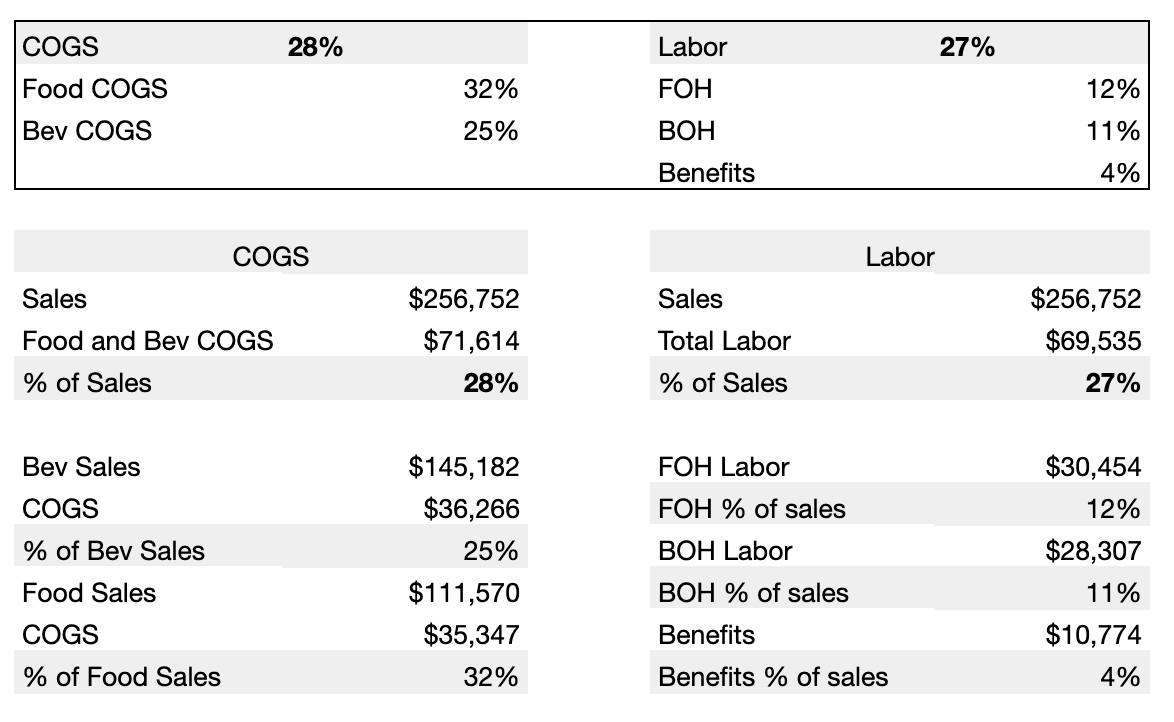
From my first location at its peak, I used the below numbers to justify expanding to more locations. My net margins were 22% for this month.
Using the new analytic methodology, I created a P&L specifically for operations. The problem with my growth assumptions becomes obvious.
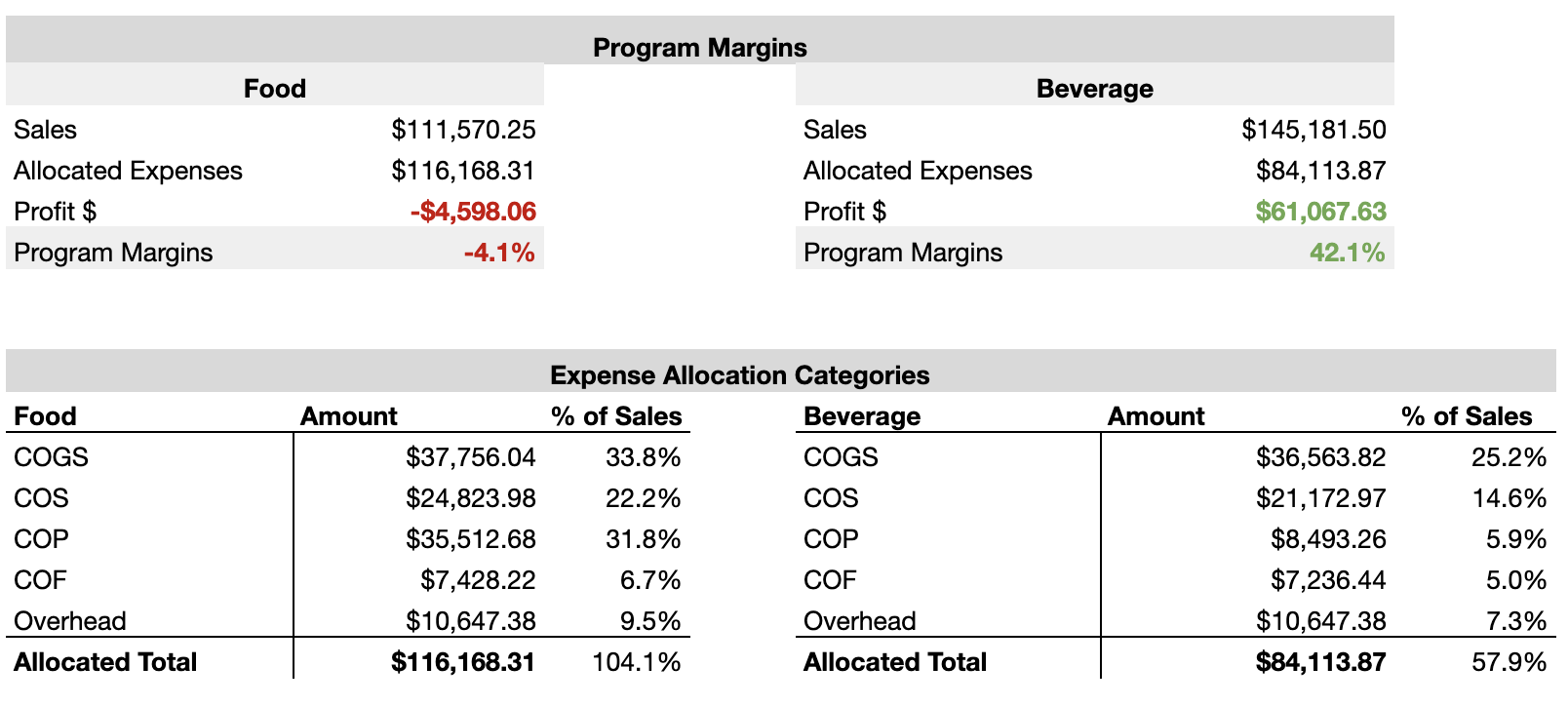
As you can see, the beverage program was covering for the losses in my food program. Further analysis using the same methodology would have identified the root cause of the loss, likely in a menu category and weekday shifts.
Net margins are deceptive. This is the blind spot. There is no column in the P&L that breaks net margins down into distinct revenue components, like the above. Without this, losses stay hidden.
The Third Way
This is how to make money. We are introducing a new operations concept called “Net Spend Productivity”. In simple terms, it is the net return on an expense, or the margin it generates. Other revenue categories can be created with the methodology. This is a new, third option for managers.
I’m starting a software company to fix this unseen, potentially fatal flaw that exists in nearly every restaurant P&L. We’ve adapted proven practices from IBM, Cisco, and Toyota for the F&B industry.
The methodology is an uncomplicated, objective North Star for decision-making.
The truth is, most restaurants already have the potential for much higher margins - and they are hiding in plain sight.
This just scratches the surface
The methodology leads to:
New F&B industry standards
Engineered margin models
A new product category
AI decision-assistance model (Decision Intelligence)